If you think someone is having a stroke, call 911 in the U.S. or your local emergency number immediately. Get help even if the signs disappear.
World Stroke Day 2026 falls on Thursday, October 29. It encourages people to learn stroke warning signs, lower their risk, and support those living with the effects of stroke.
Knowing what to do can help you act when a family member, friend, coworker, or stranger needs urgent care.
What Is World Stroke Day?
World Stroke Day takes place every October 29. The World Stroke Organization started the annual event in 2006 to raise awareness and improve stroke care.
The day focuses on three useful goals: recognizing a stroke, getting emergency help quickly, and supporting recovery.
You can take part by learning the signs, sharing clear information, or helping someone affected by stroke.
What Is the World Stroke Day 2026 Theme?
The 2026 campaign continues “Every M1nute Counts,” with the message #ActFAST.
It reminds people that a possible stroke needs immediate action. Waiting to see whether someone feels better can delay care.
A person having a stroke may struggle to speak, understand what is happening, or call for help. Someone nearby may need to recognize the change and make the call.
Know the Stroke Warning Signs
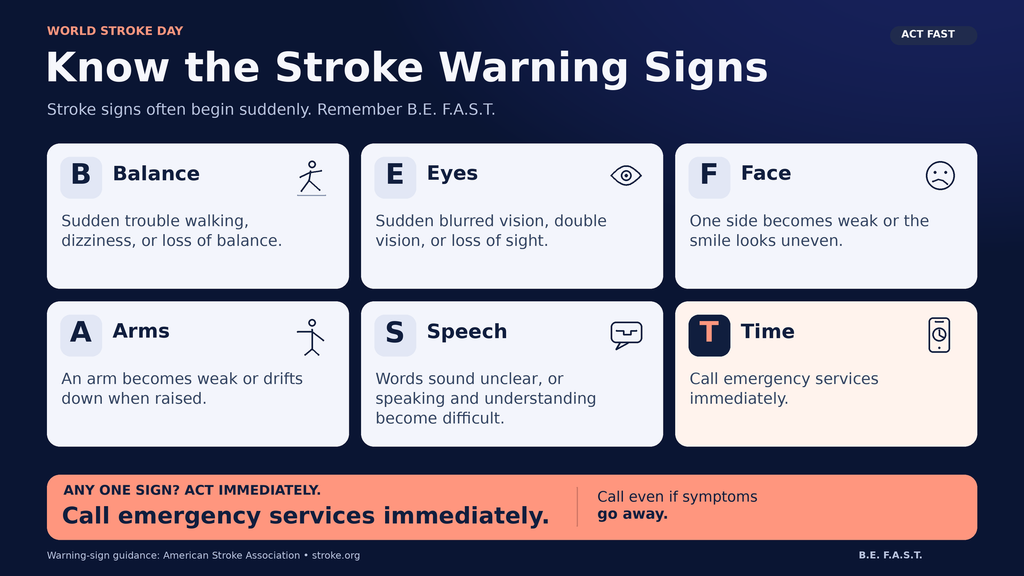
Stroke signs often begin suddenly. Remember B.E. F.A.S.T.:
- B for Balance: Sudden trouble walking, dizziness, or loss of balance.
- E for Eyes: Sudden blurred vision, double vision, or loss of sight.
- F for Face: One side becomes weak or the smile looks uneven.
- A for Arms: An arm becomes weak or drifts down when raised.
- S for Speech: Words sound unclear, or speaking and understanding become difficult.
- T for Time: Call emergency services immediately.
Other signs include a sudden, severe headache with no clear cause, confusion, or weakness or numbness on one side of the body.
You do not need to see every sign before calling. Sudden vision or balance problems can matter even without face drooping.
Are the Signs Different in Women?
Women and men share many stroke signs, including face weakness, arm weakness, and speech trouble. Women may also have less clear signs, such as general weakness, nausea, or confusion. Take sudden changes seriously in anyone, even when the signs do not match every part of B.E. F.A.S.T.
What to Do if You Suspect a Stroke
Call for an ambulance immediately. In the U.S., call 911 instead of driving to the hospital yourself.
An ambulance team can begin care on the way and alert the hospital before arrival. This helps the hospital prepare while the person is being brought in.
Tell the emergency operator that you suspect a stroke. Follow their instructions and note when the signs started. Do not wait for an appointment or spend time trying home remedies.
Do not give aspirin to treat a suspected stroke. Some strokes involve bleeding, which aspirin can make worse.
If someone wakes with symptoms, or the symptoms disappear, they still need emergency help.
What Happens During a Stroke?
A stroke happens when blood flow to part of the brain is blocked or a blood vessel in the brain leaks or breaks. This can damage or kill brain cells.
There are two main types:
- Ischemic stroke: A blockage stops blood from reaching part of the brain.
- Hemorrhagic stroke: A blood vessel leaks or breaks, causing bleeding.
A transient ischemic attack, or TIA, causes similar signs when blood flow is blocked briefly. It is sometimes called a mini-stroke, but it still needs emergency care.
You cannot tell at home whether symptoms are from a TIA or a major stroke.
Who Is at Risk?
Stroke can happen at any age, although risk generally rises as people get older.
High blood pressure, diabetes, high cholesterol, smoking, too little physical activity, and some heart conditions can raise risk. Family history and a previous stroke or TIA also matter.
High blood pressure often has no clear signs. Feeling well does not prove that your blood pressure is healthy.
How Can You Lower Your Risk?
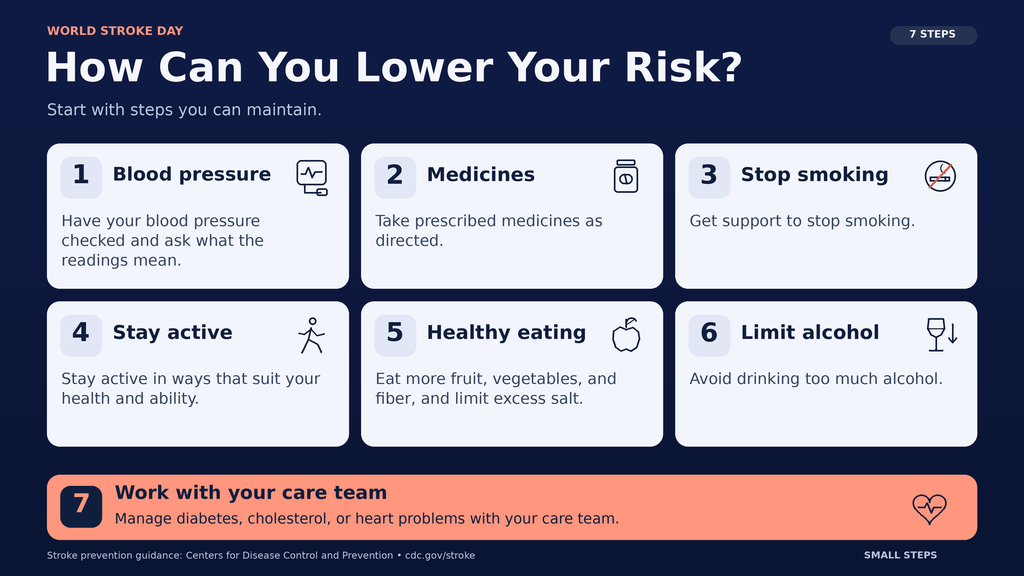
Start with steps you can maintain:
- Have your blood pressure checked and ask what the readings mean.
- Take prescribed medicines as directed.
- Get support to stop smoking.
- Stay active in ways that suit your health and ability.
- Eat more fruit, vegetables, and fiber, and limit excess salt.
- Avoid drinking too much alcohol.
- Work with your care team to manage diabetes, cholesterol, or heart problems.
These steps can reduce risk, but they cannot prevent every stroke. Knowing the warning signs remains important.
If you have already had a stroke or TIA, follow your care plan and discuss medicine changes with your doctor.
Can Stroke Be Treated?
Yes. Hospital teams use examinations and brain scans to identify the problem and choose suitable care.
Some people with a blocked blood vessel may receive medicine to break up the clot or a procedure to remove it. Bleeding strokes need different treatment, and some require surgery.
Treatment depends on the stroke type, timing, scan results, and the person’s health. Seek help immediately, even if hours have passed.
How to Take Part and Support Recovery
On October 29, teach someone the B.E. F.A.S.T. signs, share a clear awareness message, or join an activity run by a local health group.
You can also help a stroke survivor. Ask whether they need shopping, transport to appointments, or company.
Recovery differs for everyone. Rehabilitation, often called rehab, helps people rebuild skills or learn new ways to manage daily tasks. Ask your care team about support groups.
Some people need lasting support with movement, speech, thinking, or emotions. Give them time to respond and respect what they want to do themselves.
Remember caregivers too. Offering help with one regular task can ease their workload.