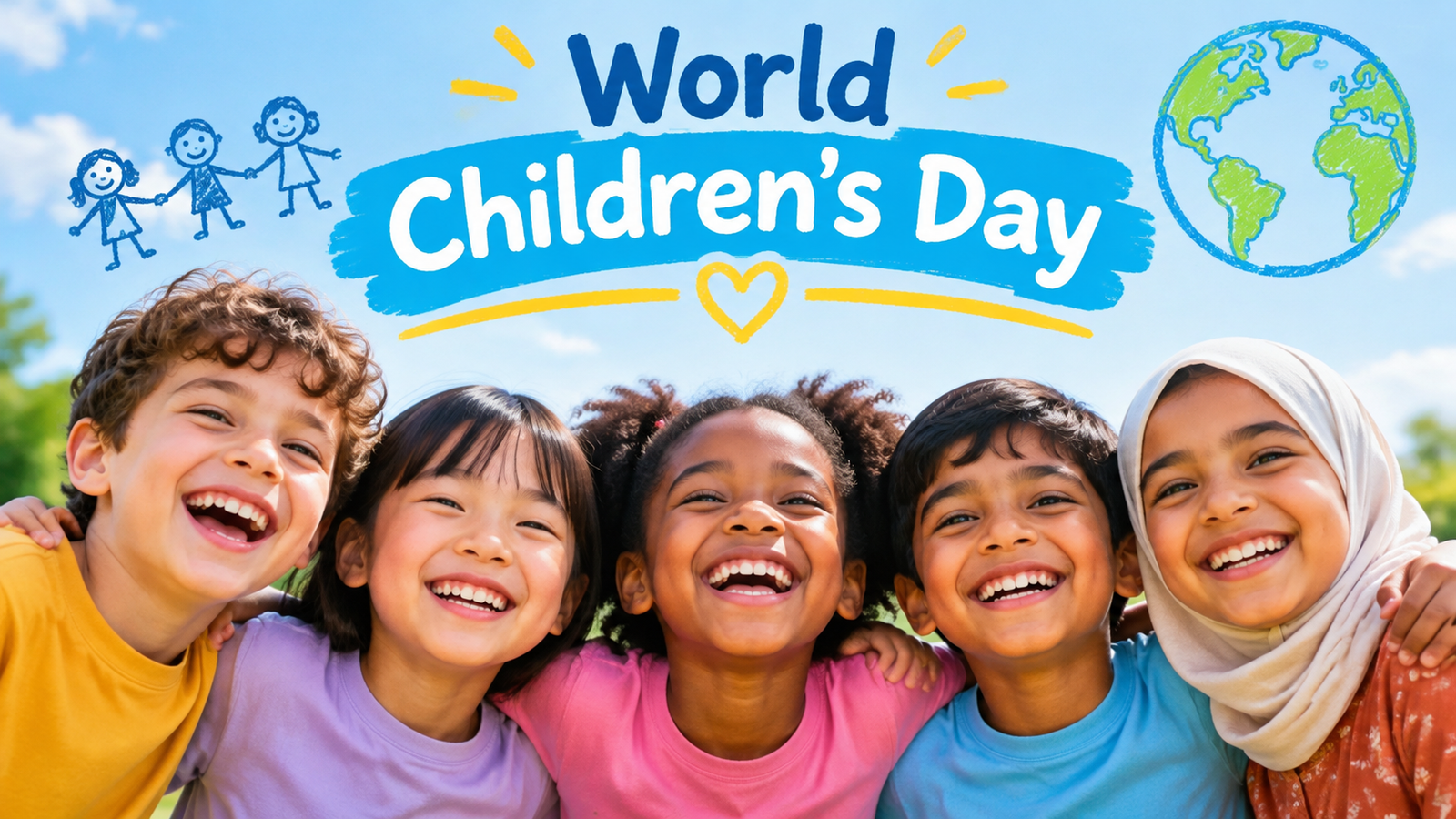
World Children’s Day is observed every year on 20 November to celebrate children and highlight their rights to safety, dignity, opportunity and a voice.
In 2026, the day takes place on 20 November, under UNICEF’s theme “My day, my rights, my future.” The campaign encourages adults and decision-makers to listen to children and include their views in choices that shape their lives.
What Is World Children’s Day?
World Children’s Day is UNICEF’s global day of action for children, by children. It raises awareness of children’s rights and gives children opportunities to speak about their experiences, concerns and hopes.
The day is closely connected to the United Nations Convention on the Rights of the Child (CRC or UNCRC), the most widely ratified human rights treaty in history.
This international treaty recognises children as individuals with their own rights—not simply as people who need adult care. Under the Convention, a child generally means every person under 18 years of age.
When Is World Children’s Day 2026?
World Children’s Day 2026 is on Friday, 20 November 2026. It is marked internationally on 20 November each year. The date is significant because the United Nations General Assembly adopted the Declaration of the Rights of the Child in 1959 and the Convention on the Rights of the Child in 1989 on this day.
Some countries celebrate their national Children’s Day on another date, so local celebrations may differ from the UN observance.
Why Is World Children’s Day Celebrated on 20 November?
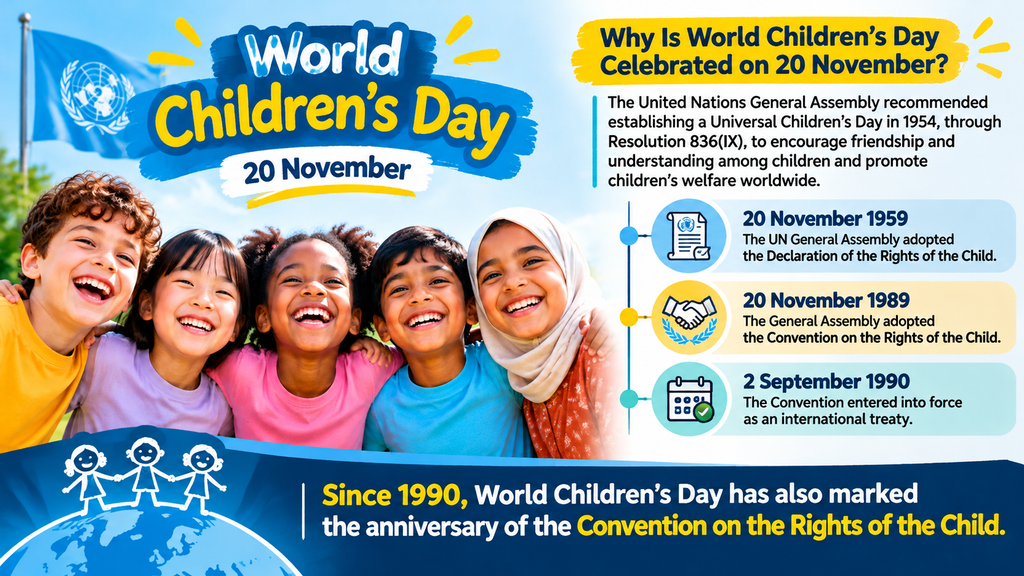
The United Nations General Assembly recommended establishing a Universal Children’s Day in 1954, through Resolution 836(IX), to encourage friendship and understanding among children and promote children’s welfare worldwide.
The date of 20 November marks two milestones in children’s rights:
- 20 November 1959: The UN General Assembly adopted the Declaration of the Rights of the Child.
- 20 November 1989: The General Assembly adopted the Convention on the Rights of the Child.
- 2 September 1990: The Convention entered into force as an international treaty.
Since 1990, World Children’s Day has also marked the anniversary of the Convention’s adoption. The observance calls on the global community to ensure that every child can enjoy their rights.
What Are the Main Rights of Every Child?
The Convention on the Rights of the Child sets out civil, political, economic, social and cultural rights. Its four guiding principles explain how these rights should be applied:
- Non-discrimination: Every child should enjoy their rights without unfair treatment because of their background, identity, disability, language, beliefs or family circumstances.
- Best interests of the child: Decisions affecting children should make their well-being and interests a primary consideration.
- Life, survival and development: Every child has the right to life and to conditions that support physical, mental, emotional and social development.
- Respect for children’s views: Children have the right to express opinions on matters affecting them, and adults should take those views seriously in ways appropriate to their age and maturity.
These principles support practical rights such as education, healthcare, protection from violence and exploitation, family care, privacy, play, rest, identity and a safe environment. Children who are displaced, living with disabilities or facing poverty must not be left behind.
Why Is World Children’s Day Important Today?
Millions of children still face barriers to a safe and healthy childhood. Poverty, unequal access to education and healthcare, child labour, abuse, discrimination and exploitation can limit their safety and development. Armed conflict can force children from their homes, separate families and disrupt schooling and essential services.
Climate change adds another challenge. Extreme heat, floods, droughts and other climate hazards can threaten children’s health, homes, food security and education. UNICEF’s 2026 climate-risk report estimates that 1.1 billion children face at least three overlapping climate hazards.
Digital technology and artificial intelligence also raise important questions about children’s online privacy, safety, inclusion and access to reliable information.
World Children’s Day asks: Are children’s rights being respected in everyday life? Awareness must lead to action.
What Is the Theme of World Children’s Day 2026?
The 2026 theme is “My day, my rights, my future.” It places children’s voices at the centre of the observance. Children are encouraged to talk about their daily lives, explain which rights matter to them and share what they want adults and leaders to change.
Decisions about education, safety, climate, equality and technology will shape the world children inherit. Listening means considering children’s views and responding with meaningful action.
How Is World Children’s Day Celebrated Around the World?
UNICEF, governments, schools, community organisations, businesses, parents and children mark the day in different ways. Activities may include:
- Children’s takeovers: Children take visible roles in media, politics, business, sport or entertainment to highlight issues that matter to them.
- Blue landmarks and buildings: Schools and well-known buildings light up or display blue to show support for children’s rights.
- School activities: Teachers organise discussions, assemblies, art projects, storytelling, quizzes and child-rights lessons.
- Community events: Families and organisations arrange performances, sports, play sessions and awareness campaigns.
- Children’s campaigns: Young people share their ideas and hopes through conversations and the hashtag #WorldChildrensDay.
These activities should help children understand their rights and show adults what children need.
How Can Parents, Teachers and Communities Take Part?
Parents and caregivers can begin by listening. Ask children what makes them feel safe, what they enjoy and what they would change. Take their answers seriously.
Teachers can explain children’s rights in age-appropriate language, invite students to discuss classroom and community issues, and create safe ways for them to share opinions. Schools can review whether every child feels included, respected and protected.
Community groups can support child-friendly events, promote access to learning and play, and help families find support services. Leaders and businesses can assess how their decisions affect children, uphold child-protection standards and invest in services that support health, education, safety and participation.
Children can take part too: share an idea, create a drawing or vision board, write a letter about the future they want, or speak with a trusted adult about an issue that matters to them.
Frequently Asked Questions About World Children’s Day
Is World Children’s Day the same as Universal Children’s Day?
Yes. The observance was originally established as Universal Children’s Day following a 1954 UN General Assembly recommendation. It is widely known today as World Children’s Day.
Is World Children’s Day celebrated on the same date in every country?
The United Nations observance takes place on 20 November. However, countries may hold national Children’s Day celebrations on other dates according to their own traditions and calendars.
What is the 2026 World Children’s Day theme?
The 2026 theme is “My day, my rights, my future,” focusing on listening to children and including their views in decisions that affect them.
What is the Convention on the Rights of the Child?
The Convention on the Rights of the Child is a United Nations treaty adopted on 20 November 1989. It sets out the rights of people under 18 and the responsibilities of governments to respect, protect and fulfil those rights.
How can I celebrate World Children’s Day?
Listen to children, talk about their rights, organise an inclusive school or community activity, share reliable information and support efforts that improve children’s safety, education, health and well-being.
Every Child Deserves to Be Heard
World Children’s Day reminds us that children are not only the future; they are people with rights today. The 2026 message, “My day, my rights, my future,” asks every generation to listen to children and take their experiences seriously. When families, schools, communities, businesses and governments protect children’s rights and include children in decisions, they help build a safer, fairer future for everyone.